There are weeks when a single data point reframes everything else happening in the market.
Key Takeaways
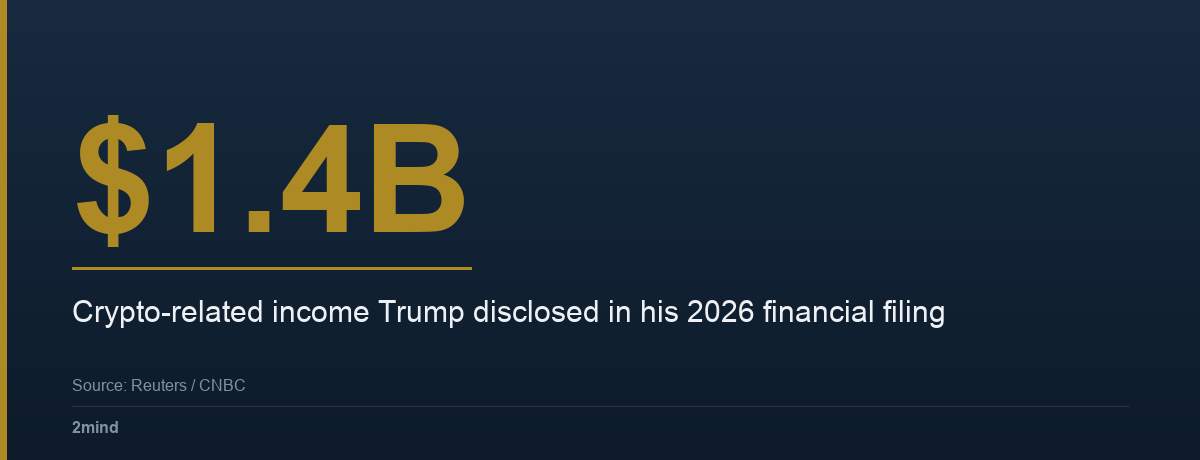
- Donald Trump disclosed over $1.4 billion in income from crypto-related ventures in his annual financial filing, released on July 1, 2026.
- This disclosure coincides with a period when the White House has been actively shaping U.S. crypto policy, including regulatory frameworks and enforcement priorities.
- The structural overlap between the president’s financial interests and his policy authority represents a conflict-of-interest dynamic that is unprecedented in modern U.S. history, and one the market has not fully priced in.
What Happened
| Prior U.S. Presidents | Trump | |
|---|---|---|
| Handling of major personal assets | Divested or placed in blind trust | Neither |
| Crypto income disclosed | None on this scale | $1.4 billion |
On July 1, 2026, Donald Trump’s annual financial disclosure, filed with the U.S. Office of Government Ethics, revealed more than $1.4 billion in income tied to cryptocurrency ventures.
NBC News and CNBC both covered the release, reporting that crypto was the largest single source of his 2025 income — a sharp reversal from his earlier skepticism toward digital assets.
Historically, U.S. presidents have sold assets or placed them in blind trusts to avoid even the appearance of a conflict of interest. Trump has done neither. The scale here is not incidental.
We are talking about a sitting head of state who is simultaneously the largest known individual beneficiary of the crypto market’s performance, while his administration sets the rules under which that market operates.
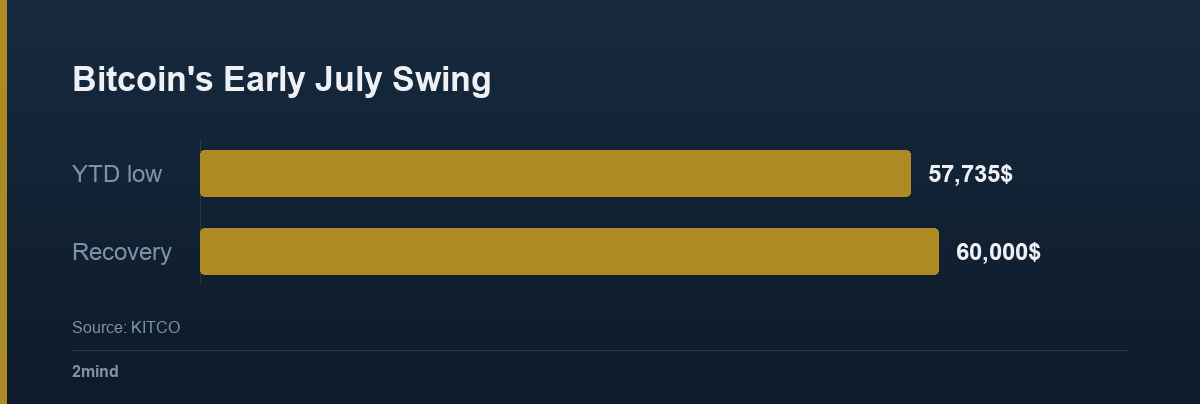
This comes in the same week that Citigroup cut its bitcoin forecast to $82,000 and its ether forecast to about $2,240, and as Bitcoin recorded a fresh year-to-date low of $57,735 before recovering toward $60,000. The market is navigating multiple headwinds at once.
What the disclosure format leaves out
The filing gives a threshold figure, more than $1.4 billion, not an itemized account of where it came from. Reporting on the disclosure points to meme coins as the largest single contributor, but that’s a characterization from coverage of the filing, not a line-by-line breakdown in the document itself.
That gap matters for how the conflict-of-interest question gets evaluated going forward.
A single aggregate number doesn’t let outside observers see whether the income is concentrated in one or two ventures with obvious ties to pending policy decisions, or spread widely enough that no single regulatory choice moves the number meaningfully.
Until a more granular accounting exists, either reading is possible, and the disclosure format itself doesn’t resolve which one is closer to true.
The Two Lenses
Lens one: The bullish reading — legitimacy at the top
One way to read this disclosure is as a signal that crypto has genuinely arrived as a mainstream asset class. When the sitting U.S. president’s wealth is denominated in digital assets, it becomes politically inconvenient to let the sector collapse.
There is a structural incentive — however uncomfortable to acknowledge — for the current administration to maintain a regulatory environment that is at least not hostile to crypto markets.
This is not a trivial point. The Biden administration’s approach to crypto regulation was adversarial for much of its tenure.
The Trump administration’s posture has been notably different: more permissive, more industry-friendly, and more willing to engage with crypto executives directly. If part of that posture is self-interest, the market outcome may still be favorable for participants. Policy alignment, whatever its motivation, is policy alignment.
Some analysts have pointed to this as one reason institutional capital has continued flowing into Bitcoin-related products even during the current drawdown. The regulatory floor feels higher than it did two years ago.
Lens two: The structural risk — when the referee has skin in the game
The more uncomfortable reading is that a $1.4 billion personal stake in crypto creates a conflict that no amount of market-friendly policy can resolve cleanly. Every regulatory decision — on stablecoin legislation, on exchange oversight, on Bitcoin ETF structures — now carries a shadow: is this good policy, or is this policy that happens to benefit the president’s portfolio?
This is not a hypothetical concern. The market is already operating in an environment where the line between political risk and market risk has blurred significantly.
A president with $1.4 billion in crypto income has every incentive to keep that market liquid and appreciating. But that same incentive could lead to regulatory decisions that favor short-term price support over long-term structural health.
Citigroup’s decision to cut its bitcoin and ether forecasts this week may partly reflect this uncertainty. When institutional analysts cannot cleanly model the policy environment because the policymaker’s personal financial interests are opaque, they tend to apply a discount.
Why It Matters
The people most immediately affected by this disclosure are institutional investors and compliance officers at firms with crypto exposure. For them, the conflict-of-interest question is not abstract — it affects how they model regulatory risk, how they structure their positions, and how they explain those positions to their own stakeholders.
Retail participants should watch two things in the coming months. First, whether Congress moves to address the conflict formally — through disclosure requirements, divestiture demands, or ethics legislation. Second, whether the administration’s regulatory decisions on pending crypto legislation show any pattern that correlates with Trump’s known holdings.
The $57,735 Bitcoin low and the subsequent recovery toward $60,000 are price events. This disclosure is a structural event. Price events resolve in days or weeks. Structural events tend to shape the environment for much longer.
The market has a habit of pricing in what it can see and ignoring what it cannot model. Right now, the conflict embedded in this disclosure is something the market is struggling to model — and that, more than any single price move, is worth watching.
Why the bitcoin price didn’t fall further on the news
It’s worth noting what didn’t happen. Bitcoin’s move this stretch was a low of $57,735 followed by a recovery toward $60,000, and the disclosure landed inside that recovery, not ahead of a fresh leg down.
If markets treated the conflict-of-interest question as an immediate structural threat to crypto’s regulatory footing, a $1.4 billion presidential disclosure landing the same week as Citigroup’s forecast cuts would be a plausible trigger for further selling.
Instead, price action moved the other direction. That’s consistent with the idea above that this is a structural story rather than a price story, the market appears to be filing it away rather than reacting to it in real time.
FAQ
Q. What specific crypto assets or ventures generated Trump’s $1.4 billion in income?
A. The disclosure confirms the total income figure tied to crypto ventures, and reporting on the filing points to meme coins as the largest contributor, but a full itemised breakdown of every asset or platform is not laid out in the public reporting.
Q. Has any U.S. president previously held significant crypto assets while in office?
A. No prior U.S. president has disclosed crypto holdings of this scale. Earlier administrations generally divested or placed assets in blind trusts; Trump has not followed that convention, making this situation structurally unprecedented.
What would change our view
This would change if Congress or the Office of Government Ethics compels an itemized breakdown of the $1.4 billion and it shows concentration in ventures tied to specific pending legislation, that would sharpen the conflict considerably.
It would also change if bitcoin resumes falling in the weeks after this disclosure, which would suggest the market is pricing in more policy risk than the immediate reaction indicated.
Sources
- NBC News, Trump’s financial disclosure lists $1.4 billion in crypto earnings (1 July 2026)
- CNBC, Trump says outside funds “run my money” after disclosure shows billions in 2025 revenue (1 July 2026)
- BanklessTimes, Citi cuts bitcoin and ether price targets as crypto ETF inflows dry up (1 July 2026)
- Kitco, Bitcoin enters July with a fresh lower low (1 July 2026)
- Bitcoin.com News, BTC reclaims $60K after falling to $57,735
Leave a Reply