I paused when I read this one, because it changes what “search” quietly means now.
Key Takeaways
- Google has applied a default privacy setting that uses image and voice data from Google Lens and voice search to train its AI models, unless users manually opt out.
- The change was not announced as a standalone policy update but surfaced through reporting on how the setting is applied by default across users’ accounts.
- This shifts the debate from “does AI use your text data” to “does AI use your camera and your voice,” which is a materially more personal category of data.
What happened
| Model | Parameters | Performance claim |
|---|---|---|
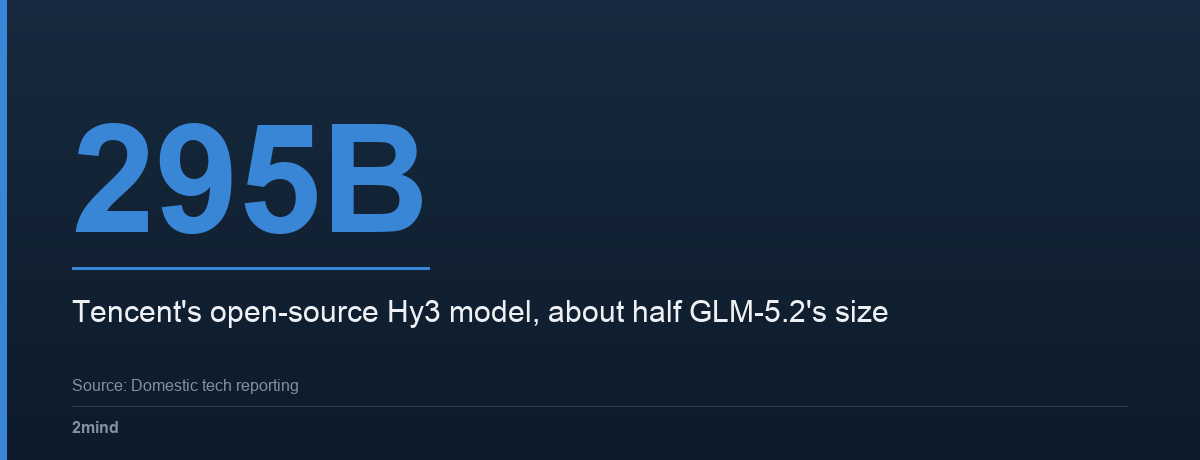
| Tencent Hy3 | 295 billion | Matches or beats GLM-5.2 in search, agent tasks, and long-context understanding |
| GLM-5.2 | ~753 billion | Benchmark Hy3 claims to match or exceed |
According to domestic tech reporting, Google has made it a default setting that media generated during AI-powered search — specifically images captured through Google Lens and audio captured through voice search features like Search Live — gets used to train its AI models.
Users are not required to opt in; instead, the data collection is active unless someone manually finds and disables it in their account settings. This detail is significant because Lens and voice search are marketed as convenience features, not as data contribution tools, so most users are unlikely to know the setting exists at all.
The disclosure comes in the same week as several other notable AI moves: Tencent released its “Hy3” model as open source, a 295-billion-parameter model the company claims matches or beats the larger GLM-5.2 (~753 billion parameters) in search, agent tasks, and long-context understanding despite being about 40% of its size.
Separately, Naver and Korea Aerospace Industries (KAI) announced a partnership to build defense-specific “sovereign AI,” with an explicit goal of extending into “physical AI” — systems that could eventually help control weapons platforms like fighter jets.
And Anthropic reported finding an internal structure in Claude that behaves similarly to “global workspace” theory, a leading neuroscience framework for conscious access in the human brain.
Why the same week produced both a data-collection default and an efficiency claim
Placing Google’s default-on training setting next to Tencent’s Hy3 release is worth doing directly.
Hy3 claims to match or beat a model roughly two and a half times its parameter count, which, if it holds, is an argument that better data and better technique can substitute for scale.
Google’s move works from the opposite assumption: that Search Live and Lens usage across billions of daily queries is a data source worth defaulting users into, rather than asking them to opt in.
Both are responses to the same underlying constraint, that publicly scraped text is running out as a resource for training new models. One company is trying to need less data. Another is trying to collect more of it, quietly, from features people already use daily without thinking of them as data-generating.
The two lenses
Lens one: Rational data strategy in a zero-sum AI race. From this angle, Google’s move is simply pragmatic. Every major AI lab is starved for high-quality multimodal training data — real-world images and natural speech are exactly what’s needed to make models like Gemini better at understanding physical context, accents, and visual reasoning.
Text scraped from the web is increasingly exhausted as a resource, so image and voice inputs generated organically through billions of daily searches represent a uniquely rich and renewable dataset.
Under this reading, defaulting to opt-out rather than opt-in is standard industry practice — it mirrors how most platforms have historically handled data collection, and users retain the ability to turn it off.
Combined with Tencent’s efficient Hy3 release, this also reflects a broader trend: the AI race isn’t just about parameter count anymore, it’s about who has access to the freshest, most human-grounded data to refine smaller, sharper models.
Lens two: A quiet normalization of surveillance-grade data collection. The counter-view is less comfortable. Voice and image data are categorically more intimate than search text — a voice recording carries emotional tone, background context, and biometric characteristics; a Lens photo could capture a person’s home, a receipt, a medical device, or a child’s face.
Defaulting this to “on” rather than asking users to actively consent shifts the burden of privacy protection onto individuals who don’t know the setting exists, which is a meaningfully different ethical posture than transparent opt-in consent.
This lens becomes sharper when placed next to Naver and KAI’s defense AI partnership: it illustrates how quickly AI is moving from consumer conveniences into militarized “physical AI,” often with limited public deliberation about where the line should be.
Anthropic’s discovery of consciousness-adjacent structures in Claude adds another layer — as models grow more sophisticated internally, the stakes of how they’re trained, and on what data, only increase.
Why it matters
Everyday users of Google Lens and voice search are directly affected, most without realizing it, since the setting requires manual action to disable. Privacy regulators in the EU and elsewhere are likely to scrutinize this default-on approach, given how it echoes past disputes over dark patterns in consent design.
Separately, the Naver-KAI defense AI partnership deserves independent tracking, since “physical AI” moving into weapons systems raises accountability questions distinct from consumer data policy.
Watch for whether Google faces any regulatory pushback on the opt-out design, and whether other companies follow Tencent’s lead in releasing smaller, more efficient open-source models rather than only chasing larger parameter counts.
This is one of those weeks where the AI story isn’t a single headline — it’s the accumulation of small defaults quietly reshaping what “using AI” actually costs.
Why Anthropic’s finding lands differently in this context
Anthropic’s report of an internal structure resembling global-workspace processing in Claude was one story among four this week, but it changes how the other three read.
The training data feeding frontier models is getting more personal, camera images, voice recordings, in the same stretch of time researchers are reporting that the models processing that data are developing more intricate internal structure.
Neither fact explains the other. But taken together, they describe a moment where what’s being fed into these systems and what’s happening inside them are both growing more complex, largely outside public view, which is a different kind of story than either headline is on its own.
FAQ
Q. Can I stop Google from using my Lens and voice search data for AI training?
A. Yes, according to reporting, users can manually change this setting in their Google account privacy controls, but it is active by default and not something most users are prompted to configure.
Q: Is Naver’s defense AI system already controlling weapons?
A: No — the partnership with KAI is described as an early-stage development effort aimed at eventually reaching “physical AI” capabilities for systems like fighter jets, not a deployed weapons control system today.
What would change our view
Our view would change if Google discloses the actual opt-out rate for this setting, showing most users have already switched it off, that would weaken the quiet-normalization reading considerably. It would also change if Naver states explicitly that the KAI partnership excludes weapons-system applications, rather than describing physical AI as an eventual, unspecified goal.
Sources
- TechTimes — 2026-07-08. Google has applied a default privacy setting that uses image and voice data from Google Lens and voice search to train i
- MarkTechPost — 2026-07-06. Tencent released its 'Hy3' model as open source, a 295-billion-parameter model the company claims matches or b
- UPI — 2026-07-07. Naver and Korea Aerospace Industries (KAI) announced a partnership to build defense-specific 'sovereign AI'
- VentureBeat — 2026-07-06. Anthropic reported finding an internal structure in Claude that behaves similarly to 'global workspace' theory
Leave a Reply