I keep noticing that bitcoin’s best days lately come from bad economic news, and that’s worth sitting with for a moment.
Key Takeaways
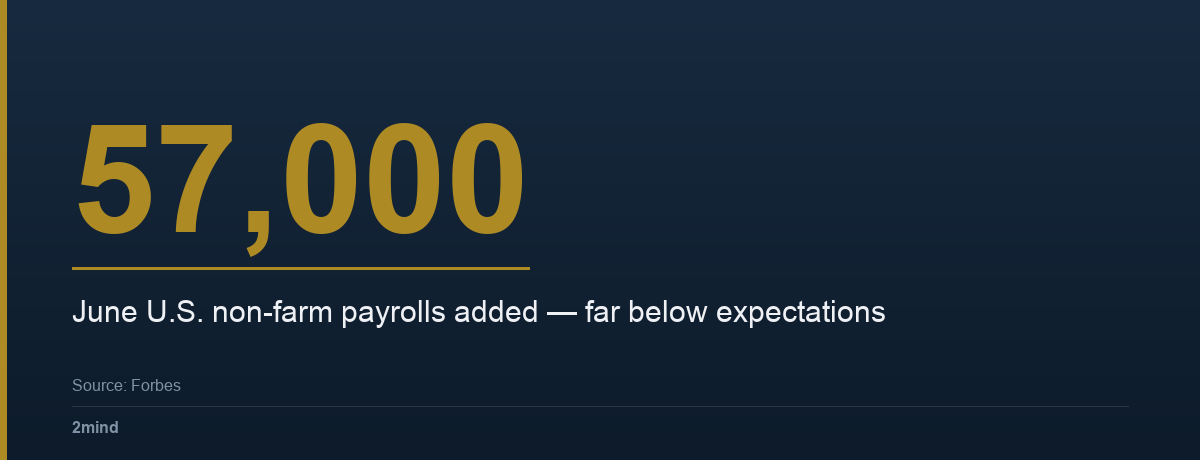
- Bitcoin bounced to over $60,000 after June’s U.S. non-farm payrolls came in at just 57,000, far below expectations, reducing the odds of further Fed tightening.
- A Nasdaq-listed Korean media firm that once planned to buy 10,000 bitcoin has sold its entire BTC holding and pivoted toward AI infrastructure instead, while Metaplanet added another $170 million in bitcoin the same week.
- The split between companies abandoning bitcoin treasury strategies and companies doubling down on them suggests the “corporate bitcoin playbook” is no longer a single, unified trend.
What happened
| Company | Bitcoin Move | Stock Situation |
|---|---|---|
| K Wave | Sold entire BTC holdings, pivoted to AI infrastructure | Trading near $0.16, two Nasdaq delisting warnings this year |
| Metaplanet | Added $170M in BTC, bringing total to 43,000 BTC | — |
On July 2, bitcoin climbed back above $60,000 after a rough stretch that had pushed it to levels not seen since Donald Trump returned to the White House, according to Forbes.
The catalyst was weak: June’s non-farm payrolls report showed only 57,000 jobs added, well under consensus, with meaningful downward revisions to prior months.
Weak labor data typically lowers the odds of further Federal Reserve rate hikes, and some traders read that as bullish for risk assets, including bitcoin and gold, as a hedge against dollar debasement.
Separately, KITCO’s technical analysis flagged that stablecoin dominance — the share of total crypto market cap held in stablecoins — printed a bearish divergence, which paradoxically reads as bullish for bitcoin and altcoins, since it can signal capital rotating out of “cash-like” positions and into risk assets.
Meanwhile, CoinDesk reported that K Wave, a Nasdaq-listed Korean media company that once announced plans to accumulate 10,000 bitcoin in a MicroStrategy-style treasury play, has now sold all of its BTC holdings and is pivoting toward AI infrastructure instead.
The company’s shares were trading near 16 cents as of June 29, and Nasdaq has twice warned it about failing to meet listing requirements this year.
Stablecoin dominance, and why a ‘bearish’ signal reads bullish for bitcoin
KITCO’s technical read flagged a bearish divergence in stablecoin dominance — the share of total crypto market cap parked in stablecoins.
That sounds like a warning sign until you translate what it means for bitcoin specifically.
A falling share of capital sitting in stablecoins can indicate money rotating out of cash-like positions and into risk assets like bitcoin and altcoins.
That’s why the same signal that sounds cautious in isolation gets read as supportive for prices in this context.
It doesn’t confirm a trend on its own — divergence readings like this can reverse quickly — but it’s one more data point pointing the same direction as the jobs report that day.
The two lenses
Lens one: the macro-hedge case. Under this reading, bitcoin’s bounce reflects its evolving role as a macro hedge rather than a purely speculative asset.
Weak jobs data plus falling stablecoin dominance plus renewed institutional accumulation (Metaplanet’s additional $170 million purchase, bringing its total to 43,000 BTC) paints a picture of capital cautiously re-entering risk assets as rate-cut expectations firm up.
In this view, bitcoin is behaving the way gold traditionally has — rising when confidence in traditional monetary policy wavers.
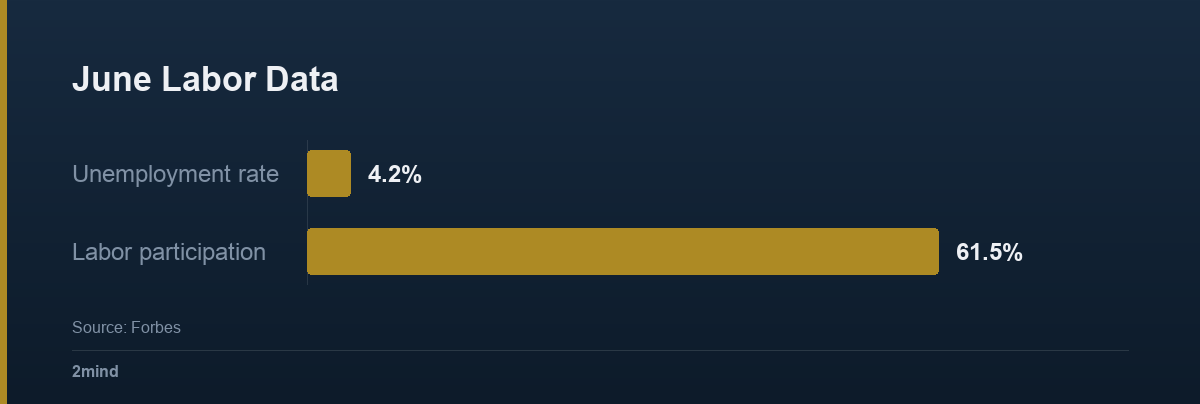
If this reading holds, the asset’s price action over the coming months will likely track Fed rhetoric and labor data more closely than crypto-specific news. Notably, the unemployment rate actually fell to 4.2% — but not because more people found jobs.
Labor force participation dropped to 61.5%, the lowest since March 2021, meaning the improvement reflects people leaving the workforce rather than genuine job growth.
Lens two: the fragile-copycat case. Under this reading, the K Wave story is the more instructive one.
Companies that adopted “buy bitcoin as a treasury strategy” without Strategy’s balance sheet discipline or investor base are now unwinding those positions under financial pressure, not conviction.
A stock trading at 16 cents with Nasdaq delisting warnings isn’t pivoting to AI because AI is a better long-term bet — it’s pivoting because the bitcoin bet didn’t buy it time.
This suggests the “corporate bitcoin treasury” trend that spread after Strategy’s success was never as uniform as headlines suggested, and some of it was distressed companies chasing a narrative rather than genuinely committing capital for the long term.
K Wave’s numbers, side by side with Metaplanet’s
K Wave’s stock trading near 16 cents with two Nasdaq delisting warnings this year is the kind of distress that usually precedes a strategic pivot, not follows from one.
Metaplanet, by contrast, added to its position from a place of relative strength, bringing its total holdings to 43,000 BTC.
Same asset, same week, opposite financial conditions — which is part of why I don’t think these two moves belong in the same category of ‘corporate bitcoin strategy’ story.
It also means the ‘corporate bitcoin treasury’ label covers companies with very different balance sheets, and lumping them together obscures more than it explains.
Why it matters
For retail observers, the key distinction is between price action driven by macro data and price action driven by structural crypto adoption — they look similar on a chart but mean very different things for durability.
For companies watching K Wave and Metaplanet move in opposite directions, the lesson is that “bitcoin on the balance sheet” is not a strategy in itself; it depends heavily on whether the underlying business can survive the volatility.
As we’ve noted in earlier coverage of corporate treasury strategies, execution and balance sheet strength matter more than the headline announcement.
Watch upcoming Fed commentary and whether stablecoin dominance actually breaks down further, since both will tell us whether this is a genuine rotation into risk or a temporary reaction to one weak jobs print.
It’s a bounce worth watching, not a trend worth assuming.
What the Fed hasn’t said yet
Nothing in this week’s reporting confirms that the Federal Reserve itself shares the dovish read markets gave the jobs report.
The rate-cut expectations are a market inference from weak data, not a stated position from any FOMC official cited in this coverage.
That distinction matters because bitcoin’s bounce is trading on an assumption about the Fed’s reaction function, not on a confirmed policy signal, which is part of why I’d treat it as provisional.
Until an official confirms that reading, I’d treat this week’s price action as consistent with a dovish narrative, not proof that the narrative is correct.
FAQ
Q. Why did bitcoin rise on bad economic news?
A. Weak jobs data lowers expectations for further Fed rate hikes, which some investors interpret as bullish for bitcoin and gold as hedges against a weaker dollar.
Q. What happened to K Wave’s bitcoin holdings?
A. K Wave, a Nasdaq-listed Korean media firm, sold all its bitcoin and is pivoting to AI infrastructure after struggling with its stock price and Nasdaq listing compliance.
What would change our view
If K Wave’s AI pivot showed real revenue traction over the next few quarters, that would suggest selling bitcoin was a legitimate strategic reallocation rather than a distressed retreat.
If Metaplanet’s larger position came under pressure during a sustained price decline — forcing it to sell rather than accumulate — that would undercut the idea that balance sheet discipline meaningfully separates conviction holders from distressed ones.
Sources
- [‘Exactly What Warsh Is Afraid Of’—Bitcoin’s Fed Nightmare Is Suddenly Coming True] — Forbes
- [Bitcoin July bounce builds as Stablecoin dominance flashes a risk-on signal] — KITCO
- [Nasdaq listed Korean Media firm that once wanted to buy 10,000 bitcoin sells all its BTC, pivots to AI] — CoinDesk
Leave a Reply