
I’ve been watching the digital asset treasury model for a while now, and this week’s news feels like the moment the cracks became visible to everyone, not just close observers.
Key Takeaways
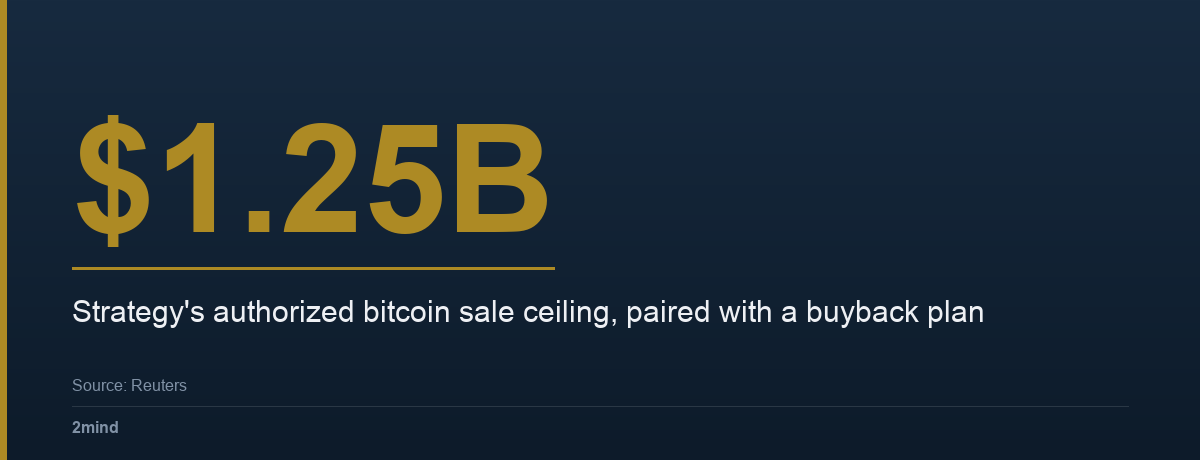
- Strategy authorized up to $1.25 billion in bitcoin sales alongside a share repurchase program, even as it remains the largest corporate holder of bitcoin.
- Bitcoin has fallen as much as 33% this year, and DAT share trading volume hit a low in February after Kevin Warsh’s Fed chair nomination news.
- The pattern suggests the “digital asset treasury” business model is far more fragile under falling token prices than its bull-market pitch implied.
What happened
Strategy, the company built by Michael Saylor around the idea of holding bitcoin as a primary corporate treasury asset, authorized as much as $1.25 billion in bitcoin sales late last month, paired with a share repurchase program.
According to Reuters, the announcement briefly lifted Strategy’s shares on Friday after analysts responded favorably to the plan. But the move also renewed scrutiny of the broader group of publicly listed companies that adopted the same bitcoin-hoarding strategy.
Strategy still holds far more bitcoin than any other public company, with BitMine Immersion Technologies — which stockpiles ether — running a distant second. Data from blockchain analytics provider Artemis Terminal shows aggregate weekly trading volume in DAT shares peaked last August and has “seesawed” since, hitting a low point in February.
That low coincided with a broader crypto selloff triggered by news that Kevin Warsh would be nominated as Fed chair — a nomination analysts believe signals a push to shrink the Fed’s balance sheet, a headwind for liquidity-sensitive assets like bitcoin.
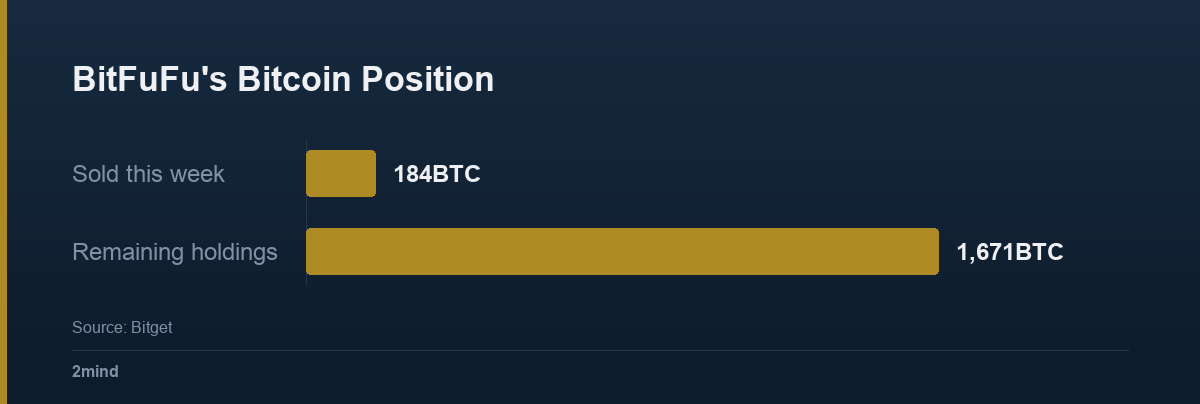
Separately, Singapore-listed mining company BitFuFu sold 184 BTC, bringing its holdings down to 1,671 BTC, according to Bitget, placing it 35th on the Bitcoin 100 list of largest corporate holders.
| Metric | Detail |
|---|---|
| Strategy bitcoin sale authorization | Up to $1.25 billion |
| Bitcoin decline this year | As much as 33% |
| BitFuFu recent sale | 184 BTC (holds 1,671 BTC) |
How the $1.25 billion authorization compares to Strategy’s holdings
Strategy remains the largest corporate holder of bitcoin by a wide margin, with BitMine Immersion Technologies — which stockpiles ether instead — running a distant second.
That gap is worth noting before reading too much into the sale authorization. An authorization to sell up to $1.25 billion isn’t the same as a completed sale.
Pairing it with a share repurchase program gives the company room to manage its stock price and its treasury separately, rather than being forced to choose one over the other.
BitFuFu’s smaller move — selling 184 BTC to land at 1,671 BTC, good for 35th on the Bitcoin 100 list — shows the same pattern at a much smaller scale.
It’s playing out among companies without Strategy’s size to absorb the pressure as comfortably.
The contrast with BitMine is a reminder that ‘digital asset treasury’ isn’t one strategy — it’s a label covering companies with very different balance sheets and risk tolerances.
The two lenses
Lens one: this is disciplined balance sheet management. From this angle, Strategy’s move isn’t panic — it’s optionality. A share buyback combined with a sales authorization gives the company flexibility to manage its capital structure without being forced into fire sales.
Companies that built treasuries during the bull run are now facing a test of whether their models can survive a drawdown, and the ones with disciplined capital allocation, like adjusting holdings rather than being wiped out, may be demonstrating resilience rather than weakness.
Bitcoin’s volatility was always part of the thesis; sophisticated treasury managers plan for it rather than being surprised by it. This kind of flexibility was framed from the start as a feature, not a flaw.
Lens two: this is the leverage model unwinding. The less generous reading is that the entire DAT concept — using public equity markets to lever up crypto exposure — depends on rising token prices to work.
When bitcoin drops 33%, the value of holdings erodes, fundraising gets harder, and the “leveraged returns” that attracted investors in the first place go into reverse. The February trading volume collapse tied to Warsh’s Fed nomination shows how sensitive these companies are to macro liquidity conditions that have nothing to do with crypto fundamentals.
If multiple DAT companies are quietly trimming holdings while headline numbers stay large, that’s a signal the model’s stress point has arrived, not a one-off adjustment.
Why February’s trading-volume low matters
Artemis Terminal’s data shows DAT share trading volume peaked last August and ‘seesawed’ since, bottoming in February around the same time Kevin Warsh’s Fed chair nomination hit the market.
That timing connects two things that look separate on the surface. Warsh’s nomination signaled a push to shrink the Fed’s balance sheet, a liquidity headwind for risk assets generally.
DAT shares, already a leveraged wrapper around bitcoin’s price, absorbed that pressure on top of bitcoin’s own decline — a double exposure retail buyers may not fully price in.
A sector that trades on liquidity conditions unrelated to crypto fundamentals is, by definition, harder to evaluate as a pure bitcoin proxy.
That’s exactly the assumption Strategy’s most straightforward retail buyers tend to make when they treat the stock as a simple stand-in for holding bitcoin directly.
None of this proves the DAT model is finished. It shows the model’s stress points line up with macro liquidity shifts that have nothing to do with whether bitcoin’s long-term thesis holds.
Why it matters
Investors holding DAT shares as a proxy for bitcoin exposure should understand they’re also holding equity-market and capital-structure risk layered on top of crypto volatility. Retail buyers who treat these stocks as a simple bitcoin bet may be underestimating how differently they behave in a drawdown compared to holding bitcoin directly.
What’s worth watching next is whether more DAT companies follow Strategy’s pattern of selling while maintaining public confidence through buybacks, and whether Fed policy under Warsh continues to act as a liquidity headwind for the sector overall.
I’ll be watching whether this becomes a broader trend across the DAT sector or stays isolated to a handful of companies.
FAQ
Q. What is a “digital asset treasury” (DAT) company?
A. It’s a publicly listed company that holds cryptocurrency, typically bitcoin or ether, as a primary treasury asset, giving stock investors indirect exposure to crypto price movements through regulated equity markets.
Q: Why did bitcoin drop this much this year?
A: Reuters cites geopolitical tensions, surging oil prices, and a Federal Reserve revamp under new chair Kevin Warsh as combined pressures on bitcoin and other risk assets this year.
What would change our view
I’m reading these sales as a stress signal, not routine treasury management. That would change if Strategy and other DAT companies rebuild their holdings once prices recover.
It would also change if that rebuilding happens without needing further sales to fund buybacks along the way.
And it would change if DAT share trading volume recovers independently of bitcoin’s price direction, suggesting investors see these stocks as more than a leveraged wrapper around one volatile asset.
Sources
- [Strategy bitcoin sales shine light on faltering crypto hoarding companies] — Reuters
- [Singapore-listed bitcoin mining company BitFuFu sells 184 BTC, currently holds 1,671 BTC] — Bitget
Leave a Reply