
I keep coming back to one detail buried under the price headlines: the miners aren’t holding.
Key Takeaways
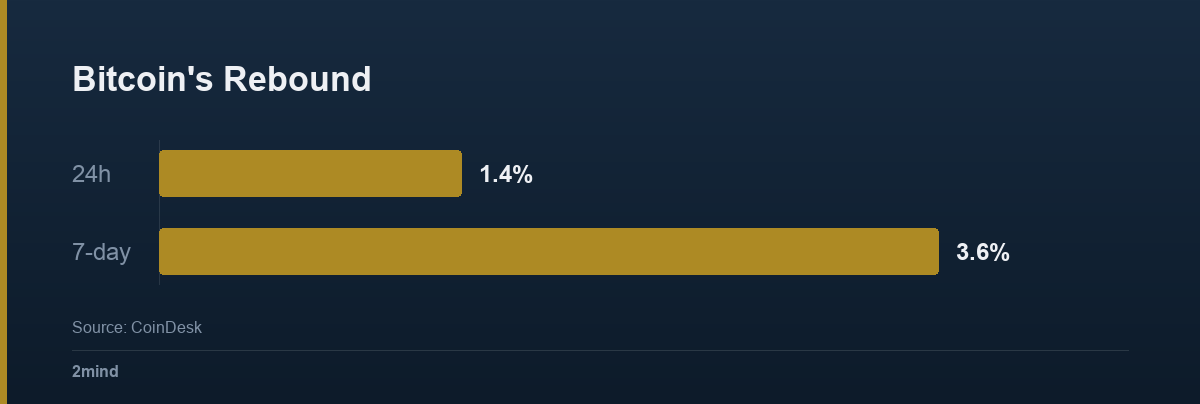
- Bitcoin climbed above $63,000 on Saturday, up 1.4% in 24 hours and 3.6% on the week, fully reversing its late-June losses.
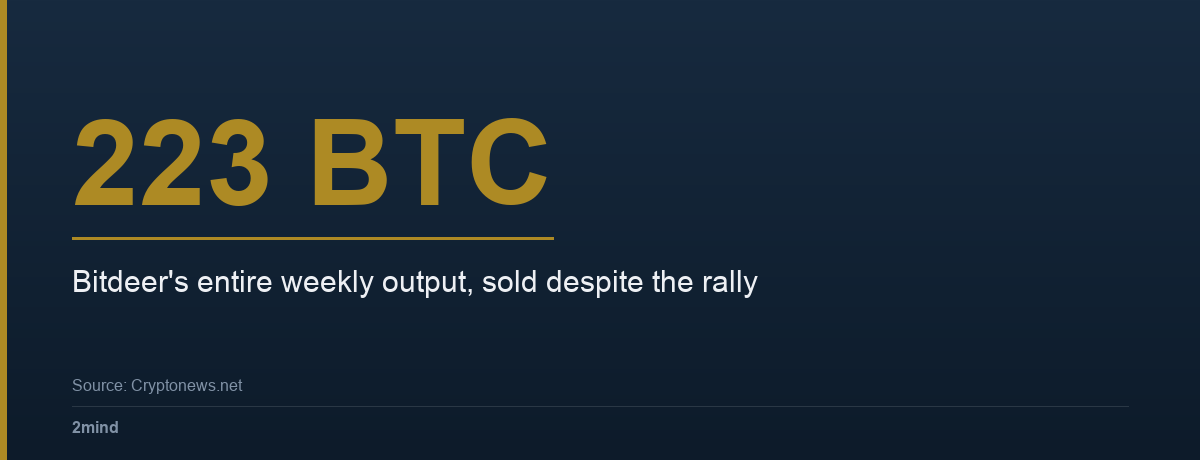
- Bitdeer sold its entire 223 BTC weekly mining output, extending a zero-holdings strategy even as prices rose.
- The gap between rising prices and miners refusing to hold suggests the rally’s foundation is thinner than the headline number implies.
What happened
| Signal | What it shows |
|---|---|
| Bitcoin price | Up 1.4% (24h), 3.6% (week), back above $63,000 |
| Bitdeer’s output | 100% sold (223 BTC), zero-holdings strategy continues |
Bitcoin entered the third quarter at 21-month lows, then clawed back to $63,000 in U.S. morning hours on Saturday, according to CoinDesk data. That’s its highest level in two weeks. XRP moved even more sharply, up over 5% on the day and nearly 10% on the week, enough to overtake USDC and become the fifth-largest cryptocurrency by market value.
The catalyst, per multiple reports, was a friendlier macro backdrop — softer U.S. economic data and comments suggesting easing inflation risk.
But there’s a caveat worth repeating: U.S. markets were closed for the Independence Day holiday, and thin holiday liquidity tends to exaggerate price swings in both directions.
Whether this holds depends on the next U.S. inflation print and whether buying continues once trading desks return to full strength.
Meanwhile, Bitdeer — a publicly traded bitcoin mining company — sold its entire weekly output of 223 BTC, according to Cryptonews.net. This isn’t a one-off. It’s a continuation of what the company describes as a zero-holdings strategy, meaning it converts mined bitcoin to cash on essentially every cycle rather than accumulating a treasury position.
The Independence Day caveat deserves more emphasis than a single sentence usually gives it. Thin holiday liquidity doesn’t just make moves bigger.
It makes them less reliable as a read on real demand, since a smaller pool of active trading desks is setting the price for everyone.
XRP overtaking USDC in market cap ranking is a genuinely unusual milestone. A volatile asset displacing a dollar-pegged stablecoin reflects a sharp price move.
Stablecoins rarely see supply changes like that in short windows, which makes the ranking shift more about XRP’s rally than USDC’s own numbers.
Bitcoin entering Q3 at 21-month lows before this rebound is also useful framing — the percentage gain looks larger relative to a depressed starting point.
The two lenses
Lens one: this is a healthy, macro-driven recovery. Bitcoin fully erasing its late-June losses in the span of a week is a meaningful technical development, especially coming off 21-month lows.
The move lines up with a broader risk-on shift — softer jobs data typically feeds expectations of rate cuts, and crypto has historically been sensitive to that narrative. XRP’s rise past USDC in market cap ranking also reflects genuine capital rotation into altcoins, not just noise.
If the upcoming inflation data confirms the disinflation story, this rebound could have real legs once holiday liquidity normalizes and full trading volume returns next week.
Lens two: miners are voting with their actions, and they’re not bullish. A mining company selling 100% of its output — even during a price recovery — is a meaningful signal about how professional, capital-intensive operators are pricing risk.
Miners have direct visibility into operating costs, hash rate competition, and the difficulty adjustments most retail traders never see.
A zero-holdings policy sustained through a rally suggests Bitdeer’s management isn’t confident enough in near-term price appreciation to justify carrying inventory risk on its balance sheet — or simply needs the cash flow regardless of price direction.
As we noted earlier this week, this kind of institutional caution often tells you more about the durability of a rally than the price chart itself.
Softer jobs data feeding rate-cut expectations is a well-worn pattern in crypto price action. But a 3.6% weekly move is large enough that macro alone may not fully explain it.
Some of the move likely reflects short covering after Bitcoin’s 21-month low, which tends to exaggerate rebounds regardless of the underlying macro story.
Bitdeer selling literally all of its output — not most, not a majority, all 223 BTC — during a week when price rose is the detail worth flagging.
A partial sale during a rally could read as routine cash-flow management. A complete sale reads more like a standing policy that doesn’t flex with price.
If the rebound holds once full trading volume returns next week, that would be a stronger signal than the headline weekly gain on its own.
The size of that rebound, on its own, is meaningful — but size alone doesn’t tell you whether it’s demand-driven or short-covering-driven.
Why it matters
Retail traders watching the price alone will see a clean recovery story. But institutional-grade miners like Bitdeer have skin in the game that retail doesn’t, and their continued liquidation — even into strength — is worth tracking alongside the price.
If more public miners follow the same zero-holdings pattern through Q3, that’s a tell about aggregate confidence in the space that price charts alone won’t show you. Watch the next CPI print, and watch whether mining companies start accumulating again once it lands.
I’m not calling this rally fake. I’m just noting that the people closest to the supply side aren’t betting on it continuing.
The next CPI print matters here for a specific reason: this rally’s catalyst was framed as inflation-easing sentiment, not a crypto-specific development.
That means the rally’s durability is tied to a macro data release that has nothing to do with Bitcoin’s own fundamentals — a fragile foundation compared to ETF inflows.
Watching whether other public miners disclose similar zero-holdings behavior over Q3 would help separate a Bitdeer-specific decision from an industry-wide read on price confidence.
XRP’s move past USDC also says something about market depth returning to altcoins even during a low-liquidity holiday window.
Retail traders watching only the price chart wouldn’t see this distinction, which is exactly why it’s worth surfacing alongside the headline recovery number.
FAQ
Q. Does Bitdeer selling its bitcoin mean the company is in financial trouble?
A. Not necessarily — a zero-holdings strategy is a deliberate policy choice some miners use to avoid balance sheet volatility, rather than a sign of distress. It simply means the company converts output to cash on a regular cycle instead of holding bitcoin as a treasury asset.
Q: Why did XRP outperform bitcoin this week?
A: XRP’s larger percentage gain appears tied to short position liquidations and renewed capital rotation into altcoins, following a sharp rebound from a 19-month low set roughly ten days earlier.
What would change our view
If Bitdeer starts holding even a small share of its monthly production going forward, the ‘disciplined cost management’ reading would need revisiting.
We’d also reconsider this rally’s durability if it survives the next CPI print without giving back these gains, which would undercut the thin-liquidity caveat above.
Sources
- [BTC price news: Bitcoin retakes $63,000, reversing end-June losses] — CoinDesk
- [Bitdeer Sells Entire 223 BTC Weekly Output, Extending Zero-Holdings Strategy] — Cryptonews.net
Leave a Reply