Key Takeaways
- Meta plans a small transaction fee on purchases Muse completes — the sources we reviewed disagree on who pays it — and says no ads run inside Muse.
- Launched Sept 8, 2026; hit #1 on both app stores within weeks.
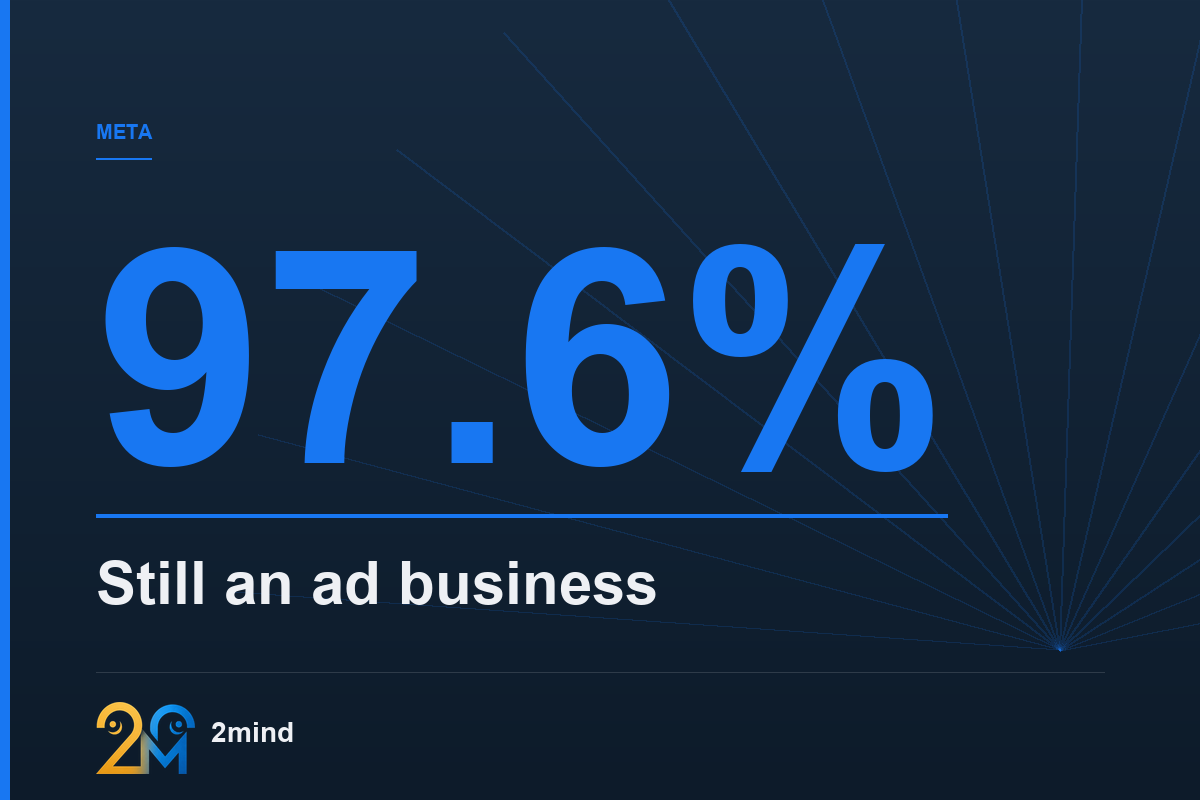
- Meta is still 97.6% advertising revenue (FY2025 10-K) — Muse is a new, separate bet.
- Meta hasn’t disclosed the fee rate or confirmed equal ranking for outside merchants.
What Zuckerberg Actually Announced
Meta’s new AI agent Muse is free for up to 100 million tokens a week, with paid subscription plans for heavier use. Meta also says it won’t run ads inside Muse. Zuckerberg said Meta expects to profit over time by taking a small fee from transactions Muse completes.
CEO Mark Zuckerberg confirmed this at Meta Connect on September 23. Meta also announced shopping connectors including Walmart, Best Buy, Sephora, and Wayfair.
That’s a real answer to “how does Muse make money,” but it’s not the whole story. An agent whose revenue depends on which merchant it books through has a new kind of incentive — one that didn’t exist when Meta’s business was just showing you ads.
Muse debuted free of charge on September 8 and quickly topped both major app stores. At Connect, Zuckerberg laid out how Meta plans to make money from it going forward: keep Muse free for a large allotment of tokens, then take a small cut whenever the agent completes a purchase on a user’s behalf.
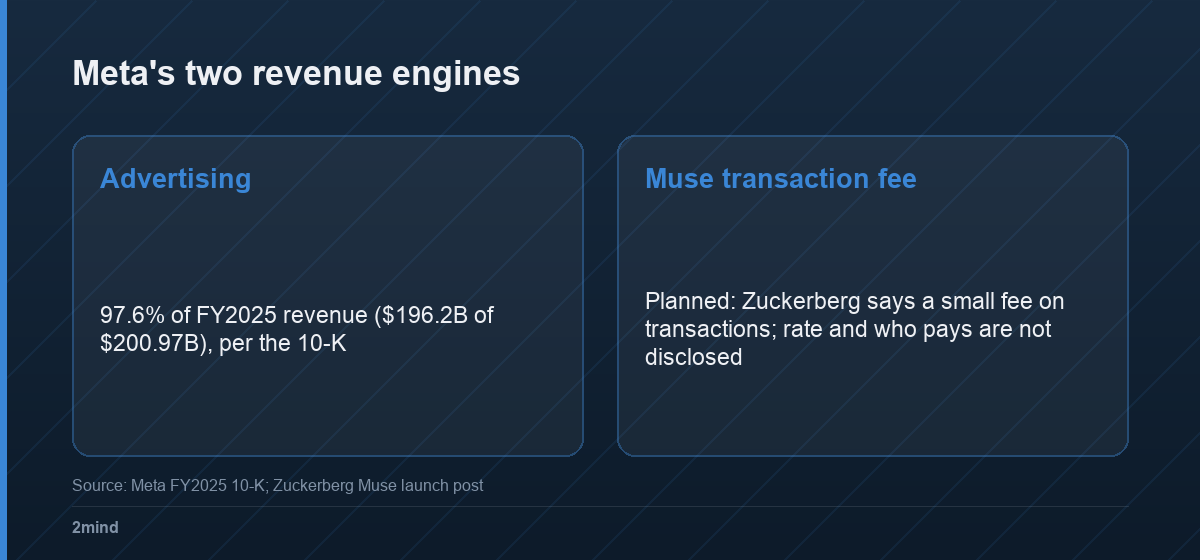
That’s a different engine from the one that built Meta. The table below lines up the two side by side, using Meta’s own SEC filing for the current numbers.
| Revenue engine | Who pays | What it depends on | Disclosed rate |
|---|---|---|---|
| Advertising (Facebook, Instagram) | Advertisers, per impression/click | Attention and engagement | Public, reported quarterly |
| Muse transaction fee | Unconfirmed, per purchase | Actions the agent takes for you | Not disclosed |
Meta’s FY2025 10-K puts advertising at $196.175 billion of $200.966 billion in total revenue — 97.6%. Muse’s fee model doesn’t touch that number yet. It’s a new bet layered on top, not a pivot away from ads.
Which Merchants Are Connected
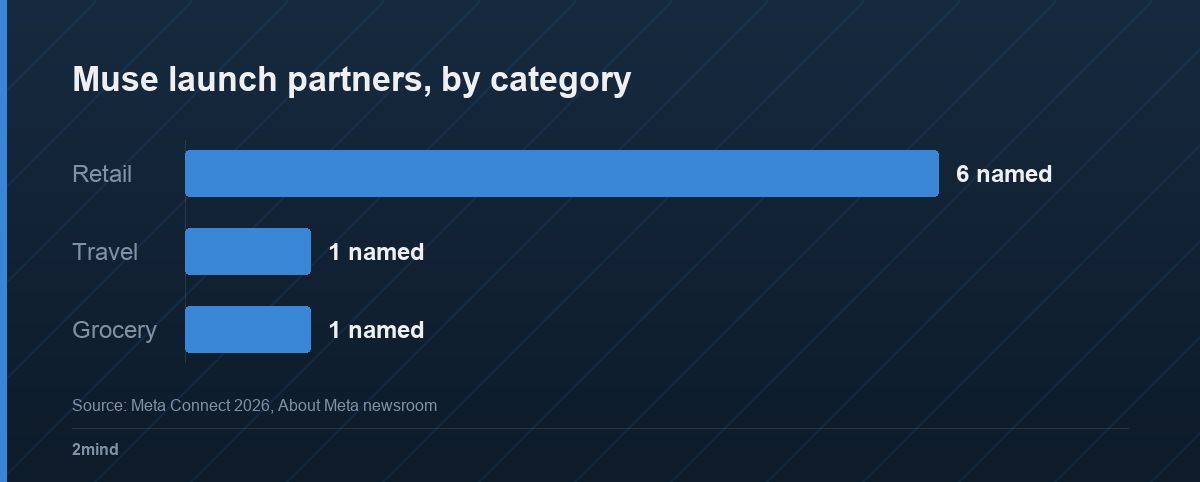
Meta named its first wave of partners at Connect: Walmart, Best Buy, Gap, Sephora, Wayfair, and American Eagle for retail, Expedia for travel, and Instacart for groceries. Muse also added support for PayPal, which handles the actual payment once the agent completes an order.
Every name on that list opted in and presumably negotiated terms with Meta. Nothing in Meta’s public statements says what happens when a user asks Muse for the cheapest version of something, and the cheapest option isn’t sold by one of these partners.
How To Check If An AI Agent’s Pick Is Paid For
Muse isn’t the only AI shopping agent that will face this question, so this checklist applies beyond Meta:
- Ask whether the agent discloses paid partners. Muse’s partner list (Walmart, Best Buy, Sephora, Wayfair, American Eagle, Expedia, Instacart) is public; a shorter or vaguer list is itself a signal.
- Run a manual search on the same item. Compare the agent’s top pick to what a plain web or store search turns up at the same moment.
- Check if the top pick is a named partner. If the agent’s “best” result is consistently a company Meta has named as a launch partner, that’s worth tracking over repeated queries, not one-off.
- Look for a raw, unranked option. An agent that lets you see all matching results, not just its top pick, gives you a way to verify the recommendation yourself.
Two Lenses
The free concierge you didn’t have to pay for
For a user, this is the pitch that’s easy to like. Muse already handles bookings and shopping without a monthly fee. The money changes hands after the task is done, not before.
Reaching #1 on both app stores in weeks suggests people are trying it and not immediately backing away. If the agent genuinely saves time and money, a fee tied to completed purchases is arguably fairer than an ad model that monetizes your attention whether you buy anything or not.
If a merchant pays, does it get the booking?
The same structure creates a question no ad model had. If merchants do end up paying Meta a cut, does Muse’s “best pick” change when one merchant pays and a competitor doesn’t?
Meta hasn’t published the fee rate, and it hasn’t said whether it ranks partner and non-partner merchants the same way. We could not verify either point from primary sources for this piece — Meta’s own materials don’t address it. That silence is itself worth noting for anyone letting an agent choose where their money goes.
Why a Fee Fits an Agent Better Than an Ad Does
An agent that books your flight or orders your groceries in the background never shows you a banner to click. There’s no attention to sell.
A transaction fee monetizes the outcome instead. Meta gets paid only when Muse actually completes something useful — a cleaner incentive than an ad load it can’t insert into a task the user never watches.
It also explains why Meta felt comfortable promising no ads inside Muse specifically. The promise isn’t about avoiding monetization; it’s about using a mechanism that fits an agent’s actual behavior instead of forcing an ad-shaped model onto a tool that mostly works silently.
What would change our view
If Meta publishes the actual fee percentage, or confirms that non-partner merchants rank on equal footing in Muse’s results, this reads as a transparent affiliate model rather than a hidden bias risk. If Meta instead starts hiding cheaper non-partner options from results entirely, that’s the point our view shifts from “watch” to “concern.”
FAQ
Q. Does Muse cost anything to use?
A. Muse is free for up to 100 million tokens a week, with paid subscription plans for people who use more. Zuckerberg also said Meta expects to profit over time by taking a small fee from transactions; who pays that fee is not settled in the sources we reviewed.
Q. Which merchants has Meta named as launch partners?
A. Meta has publicly named its launch partners — Walmart, Best Buy, Gap, Sephora, Wayfair, American Eagle, Expedia, and Instacart — but hasn’t published the fee percentage or said whether non-partner merchants are ranked the same way in Muse’s results.
Q. Is this the end of ads on Meta’s apps?
A. No. Meta has said Muse itself won’t carry ads, but Meta’s FY2025 10-K shows 97.6% of total revenue still comes from advertising on Facebook and Instagram. Muse’s transaction fee is a new, separate revenue line, not a replacement for Meta’s ad business.
Sources
- Mark Zuckerberg on X, Muse launch post — Sept 2026: free for up to 100M tokens per week, with subscription plans for heavier use
- About Meta, “The Biggest News From Connect 2026” — Sept 2026
- Zuckerberg says Muse will take a small fee from transactions — Yahoo Finance, Sep 23, 2026
- Everything new coming to Meta’s AI agent Muse — TechCrunch, Sep 23, 2026
- Meta Muse AI agent will earn from transaction fees, not ads — Medianama, Sep 2026
- Meta Platforms 10-K, FY2025 — SEC EDGAR
- Mark Zuckerberg debuts $1,299 Meta VR Glasses and Muse Charm — CNBC, Sep 23, 2026
This piece follows our earlier look at Meta’s AI strategy and how Meta’s open-weight releases fit the same pattern of opening one layer while keeping the money-making layer close.
If an AI agent’s top pick turns out to be a merchant paying it a fee, would you still trust it to find you the cheapest option — or would you go check yourself?
Correction, October 2, 2026. An earlier version said Muse has no subscription and that merchants such as Walmart and Sephora pay a fee for each purchase. Muse is free for up to 100 million tokens a week, with paid subscription plans above that.
Zuckerberg said Meta expects to profit from a small fee on transactions, but the sources we reviewed disagree on who pays it, and retailers were announced as shopping connectors. The title was changed to match.
Related from 2mind
- Who Pays for Data Center Grid Upgrades? Ohio Charges 85% Even Idle
- AMD Crossed $1 Trillion. Is It Above the Analysts’ Average Target? It Depends on the Source
- GPT, Claude and Gemini Token Prices Compared: Official Rate Cards and Cost per Article
- What Is Meta’s AI Strategy? Own the Assistant, Not Just the Model
Leave a Reply